
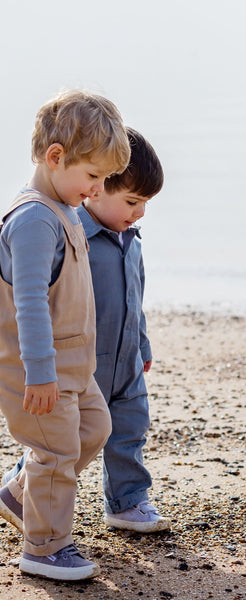

Living in the UK, waiting for a completely dry day before getting outside with children would mean spending rather a lot of time indoors.
I’m not someone who thinks every family walk needs to become a wholesome woodland adventure. Sometimes it’s cold, somebody doesn’t want to put their coat on, and you’ve already spent ten minutes looking for the other welly. But I’ve found that on the days when everyone is getting a little restless, even twenty minutes outside can completely change the mood.
With Darcey and Freya, I’ve gradually stopped seeing rain as a reason to cancel outdoor play. Quite often, the rain is the activity.
Why getting outside is worth the effort
The current UK Chief Medical Officers’ guidance says children aged one to five should aim for at least 180 minutes of physical activity spread throughout the day. That doesn’t mean three hours of organised exercise. Walking, climbing, jumping, messy play, scooting, dancing and ordinary games all count.
The Department for Education also highlights outdoor play as particularly valuable for developing gross motor skills because children have more freedom to run, climb, balance and explore.
I like that way of looking at it because it removes some of the pressure. We don’t need to create an elaborate activity. Going outside and letting children move is already doing something useful.
Let the weather become the game
One thing toddlers are very good at is finding entertainment in things adults have learned to ignore.
A puddle is not just a puddle. It’s something to jump over, jump into, stir with a stick, float a leaf across and then jump into again for good measure.
On wet days we’ve done things as simple as:
- finding the biggest and smallest puddles
- collecting different coloured leaves
- making muddy footprints
- looking for worms and snails
- taking a bucket outside and making ‘soup’ from rainwater, leaves and grass
- racing sticks or leaves through running water
None of these need preparing in advance, which is exactly the sort of activity I want when I’m already juggling everything else.
You don’t have to go anywhere
I think we sometimes associate getting children outside with packing a bag and driving somewhere.
It really doesn’t have to be a day out.
A garden, a walk around the block or ten minutes at the local park counts. The NHS suggests everyday activities such as walking, running around the park, throwing a ball and letting toddlers walk part of a journey rather than always travelling in the pushchair.
Some of our easiest outdoor time happens at home because there’s no pressure to stay out. If everyone is freezing after fifteen minutes, we go back inside.
The clothes need to survive childhood
This is probably where being both a mum and somebody who has spent years working with children’s clothing overlap.
I don’t want the girls worrying about keeping their clothes pristine while they’re playing. Children should be able to crouch down, climb, sit on the ground and investigate something muddy without me following them around saying, “Be careful with your trousers.”
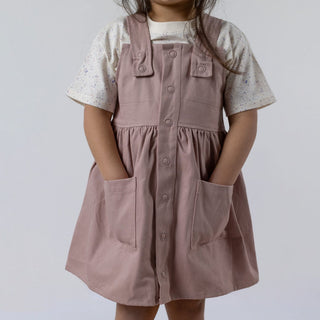
That’s one of the reasons I’ve always liked comfortable, easy-to-layer clothes for children. On cooler days, a soft base layer with something more substantial over the top works far better for us than one bulky outfit. Our organic kids’ clothes are designed with that kind of everyday movement in mind, but whatever children are wearing, I’d choose something comfortable that you’re happy for them to actually play in.
And then add the waterproof layer on top. This is Shropshire, after all.
What if they really don’t want to go outside?
I don’t think forcing a reluctant toddler into a lovely nature walk is particularly enjoyable for anybody.
Instead, I find giving the outing a tiny purpose works much better than simply announcing that we’re “going for a walk”.
Can we find three red leaves? Shall we see if the big puddle is still there? Can you take this letter to the postbox? Shall we look for a snail?
The NHS’s Best Start in Life guidance suggests following a toddler’s lead during play rather than directing everything they do. I think that applies outdoors too. Give them the opportunity, then see what catches their attention.
And sometimes we stay inside
There are also days when it is absolutely tipping down, everyone is tired and going outside sounds awful.
That’s fine too.
Physical activity can happen indoors: dancing in the kitchen, hide-and-seek, building a cushion obstacle course or simply letting children race around the house for a bit. The aim isn’t to create another parenting rule to feel guilty about.
For me, it’s simply been useful to stop automatically writing off outdoor time because the forecast shows rain.
Children generally care far less about bad weather than we do. Give them a puddle, some wellies and permission to get muddy and they’re often perfectly happy.
We just have to remember the spare socks.
Steph x
Useful UK guidance: UK Chief Medical Officers’ physical activity guidance for under-5s, Department for Education guidance on gross motor skills and NHS Best Start in Life toddler activities.