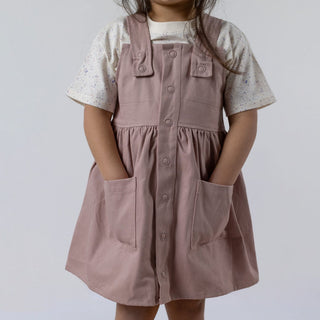



There comes a point with toddlers when “I do it!” applies to absolutely everything. Pouring the milk. Opening the door. Putting on shoes. And, of course, getting dressed.
As a mum, I love seeing that independence grow. As someone who also needs to get everyone out of the house in the morning, I’ll admit that watching a small child spend five minutes trying to put one leg into the wrong trouser hole can test even the most patient of us.
But learning to get dressed is actually a really useful developmental skill. NHS occupational therapy guidance explains that dressing involves body awareness, sequencing, balance and fine motor skills, as well as building confidence and independence.
So rather than treating getting dressed as another job we need to do for our children, I’ve started thinking of it as something they can gradually learn to do themselves.
Start with taking clothes off
This was one of the most useful things I discovered. Children generally learn to undress before they learn to dress.
It makes sense when you think about it. Pulling off a sock is much easier than working out where the heel goes and getting it back on again.
Somerset NHS Foundation Trust recommends starting with undressing, then gradually encouraging children to take part in more of the dressing process. That might simply mean pausing and letting them push their own arm through a sleeve rather than doing the whole thing for them.
Let them finish the job
There’s a lovely technique called backward chaining, which sounds far more complicated than it is.
You do most of the task and let your child complete the final step. For example, you might pull their trousers almost all the way up, then let them finish pulling up the waistband. Once they can do that confidently, you leave the final two steps to them.
It gives them the satisfaction of finishing the task without expecting them to master everything at once.
Practise when nobody needs to leave the house
This one is probably obvious, but I’ve definitely been guilty of trying to encourage independence at exactly the wrong moment.
Monday morning, shoes missing, nursery bag not packed and somebody announcing they need the toilet is not the ideal environment for learning a new skill.
Several NHS occupational therapy teams recommend practising dressing when children and parents aren’t rushed. Weekends, evenings or even dressing-up games are much easier than trying to teach it while watching the clock.
Make the clothes easy to manage
The clothes themselves make a surprisingly big difference.
Loose-fitting tops, stretchy fabrics, elasticated waists and simple fastenings are easier for little hands to manage. Berkshire Healthcare NHS Foundation Trust specifically recommends loose clothing with minimal fastenings when children are learning dressing skills.
It’s something I think about a lot when designing Aneby clothes. Children need room to squat, climb, pull and wriggle, and parents need clothes that aren’t unnecessarily complicated. Our toddler dungarees, for example, have relaxed fits and adjustable straps, although I’d still rank dungarees as a slightly more advanced dressing challenge than a good elasticated waistband!
Lay everything out in order
For younger children, remembering what comes next can be as difficult as physically putting the clothes on.
Try laying clothes on the floor in the order they need them: pants, trousers, top, socks, jumper. Keeping the routine roughly the same each day helps make the sequence predictable.
You can also talk through what they’re doing: “First your left leg, then your right leg, now pull them up.” It sounds simple, but they’re learning the names of body parts and the order of the task at the same time.
Ignore the backwards T-shirt occasionally
This might be my favourite part.
If they’ve managed to dress themselves and the T-shirt is backwards, does it always need correcting?
Sometimes I think the confidence that comes from saying “I did it myself” matters more than looking perfectly put together. There will be plenty of time to work out labels, left shoes and which way round trousers go.
Praise the effort rather than only the finished result. Newcastle Hospitals’ occupational therapy guidance recommends exactly that: patience, practice and positive reinforcement.
What age should children dress themselves?
There isn’t one magic age. Children develop at different rates, and dressing is made up of lots of separate skills.
Gloucestershire Health and Care NHS Foundation Trust suggests that around age three many children can dress and undress with help for fastenings and getting clothes the right way round. Around four, they may manage larger buttons, while more independent dressing continues developing through the early school years.
So if your two-year-old can only pull off their socks, that still counts. If your four-year-old needs help with a zip, that can be completely normal too.
A little independence goes a long way
Getting dressed probably isn’t going to become a peaceful Montessori-style moment every morning. Some days I’ll still dress everyone myself because we simply need to get out of the door.
But giving children little opportunities to try, when we actually have the time, can turn an everyday routine into a chance to practise independence.
And eventually, hopefully, we get the ultimate reward: telling them to get dressed and discovering that they actually have.
Steph x
Useful UK guidance: Somerset NHS Foundation Trust dressing skills, Berkshire Healthcare dressing skills and Gloucestershire children’s occupational therapy guidance.