

Every Christmas, somebody asks the same question: how many Christmas presents should a child get?
It usually comes from a good place. Parents do not want to underdo it. Grandparents and nans want to make the day feel special. Then several well-meaning adults all buy “just a few things” and suddenly the sitting room looks like a toy shop delivery bay.
We have had Christmases with Darcey and Freya where the pile looked exciting to us, but became far too much for them. Halfway through opening, they wanted to play with the first present, eat something, or disappear into another room. The remaining parcels were mainly being opened because the adults wanted to see them opened.
There is no correct number of Christmas presents
No official guidance says a toddler should receive three presents, six presents or any other fixed amount. Family budgets, traditions and circumstances are different.
I find it more useful to ask whether each present has a clear purpose. Will it be played with, worn, read or genuinely enjoyed after Christmas Day? If the answer is unclear, it probably does not need to be added to the pile.
A small study of 36 toddlers compared play in rooms containing four toys and sixteen toys. With fewer toys available, the children played with individual toys for longer and used them in a greater variety of ways. It does not tell us the perfect Christmas number, but it does suggest that more choice does not automatically create better play.
Start by adding up presents from everybody
The problem is rarely one person buying too much. It is that parents, two sets of grandparents, aunties, uncles and friends are all shopping separately.
A quick family message before anyone buys can prevent a surprising amount of duplication. We try to share a few ideas and make it clear that nobody needs to buy from every category.
It can help to divide the wish list loosely between:
- one thing the child is genuinely excited about
- books or creative activities
- something useful, such as clothing or bedding
- an experience or contribution towards a day out
This is not a rigid four-present rule. It is simply a way of helping several adults buy together instead of creating four separate Christmases.
Think about February, not just Christmas morning
The most successful presents in our house are not always the most impressive ones to unwrap. They are the things still being used in February.
Open-ended toys, books, craft materials and dressing-up pieces can return to play in different ways. Experiences are useful when storage is limited, while consumable gifts such as baking ingredients, colouring supplies or bath products do not need a permanent home.
I am also completely comfortable with pre-loved presents. Children do not care whether a wooden kitchen, bike or set of bricks came from Vinted, Facebook Marketplace or a shop. They care that it is new to them.
Clothing can be a thoughtful gift, if you check first
Clothes are useful, but guessing a child’s size or the parents’ taste can easily create another item that is never worn.
If you are buying for a grandchild, ask what size they are wearing now and whether the parents would prefer the current size or something to grow into. Our baby and toddler size calculator can help with UK and European sizing.
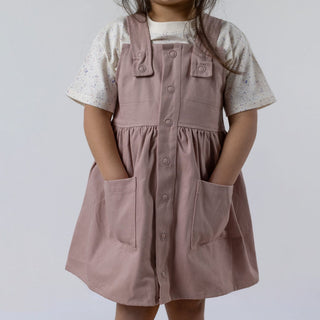
I would rather receive one comfortable piece that works with several outfits than three very specific outfits with limited use. If clothing is on the list, our Aneby collection is designed around simple colours and pieces that can be mixed together, but the same principle applies wherever you shop.
Let children stop opening presents
Young children do not understand that Christmas morning has an opening schedule.
If they want to pause and play, I let them. Some presents can wait until later that day or even the following morning. Slowing things down gives them time to notice what they have received, and it removes the strange pressure to perform excitement for a room full of adults.
For children who find noise, visitors or changes of routine difficult, a smaller pile and a quieter pace may make the whole day easier.
Do a quick safety check before wrapping
For children under three, always follow the age warning and check for small parts, strong magnets and accessible button batteries. Government toy safety advice also recommends buying from reputable sellers, checking recall information and making sure battery compartments are secured with a screw.
This matters particularly with bargain toys from unfamiliar online marketplace sellers. A low price is not worthwhile if the seller or manufacturer cannot be identified.
What I tell grandparents
If you are a nan or grandparent reading this, one thoughtful present is enough. You do not need to compete with the other side of the family or fill an enormous stocking to be remembered.
Ask the parents what would genuinely help. Include a gift receipt when you can. If you want to spend more, consider putting something aside for a future day out, pair of shoes or larger item rather than adding another five toys.
Children remember who played with them, read the new book repeatedly and sat on the floor building the bricks. They do not count who supplied the biggest pile.
So, how many Christmas presents should a child get?
There is no magic answer. For our family, fewer well-chosen presents work better than lots opened for the sake of it.
The right number is the number your family can afford, your home can manage and your child can enjoy without becoming overwhelmed. Christmas does not become more magical with every extra parcel.
Steph x
If you enjoy realistic parenting ideas without the pressure to do everything perfectly, you can join the Aneby newsletter.
Useful reading: Research on the number of toys and toddler play, GOV.UK Christmas toy safety advice and Which? guidance for buying children’s gifts.